

Curate your library with a Vintage Bookends Collection
Reading Nook
Key takeaway: Authentic vintage bookends evolved from 19th-century iron tools into sophisticated art pieces. You can verify true antiques by spotting crisp Bradley & Hubbard or Hubley foundry marks and testing for heavy density. Identifying genuine patinas versus modern spray-on finishes ensures you invest in lasting quality that adds historical soul and curated character to your contemporary library shelves.
The global antique market has seen a significant resurgence, with functional metalwork from the 19th century now commanding premium attention from interior designers. You likely find your shelves looking cluttered and uninspired, lacking that anchor of historical character to secure your favorite volumes.
We will help you navigate the world of the Vintage Bookends Collection to distinguish genuine foundry masterpieces from cheap resin fakes. Let’s explore how these sculptural tools can transform your library into a curated gallery of timeless design.
- The Evolution of the Vintage Bookends Collection
- 3 Definitive Design Eras You Need to Know
- How to Spot Authentic Pieces vs Modern Reproductions?
- Styling Antique Supports in a Contemporary Space
The Evolution of the Vintage Bookends Collection
Victorian cast iron heavyweights, Art Deco geometric brass, and Mid-Century teak dominate the antique bookend market. Authenticity is verified through foundry marks like Bradley & Hubbard, specific gravity of metals, and natural oxidation patterns.
The transition from industrial utility to artistic expression is visible in the very weight of these objects.
From functional library tools to decorative art
The 19th-century L-bracket started it all. These simple iron plates were purely utilitarian. They functioned to hold massive leather-bound volumes before anyone cared about library aesthetics.
The industrial revolution changed everything. Factories began casting ornate shapes in large numbers. This mass production allowed middle-class families to finally decorate their shelves.
Eventually, real sculptors entered the scene. They traded basic iron for bronze and fine alloys. This shift turned simple supports into genuine pieces of domestic art for the home.
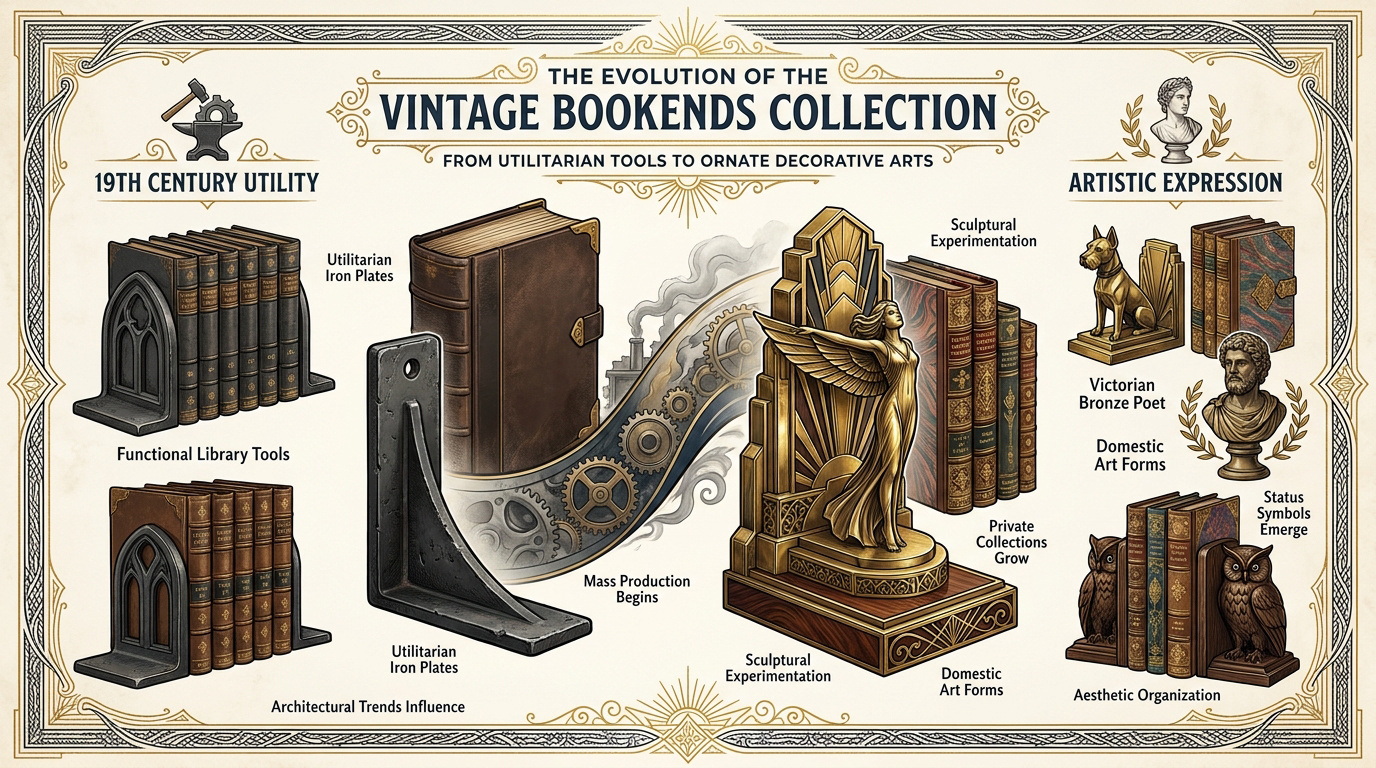
How the 19th-century home library changed design
Private book collections exploded as literacy rates climbed. Families needed better ways to organize their growing libraries. Shelves quickly became the heart of the modern home.
Bookends became essential status symbols. Wealthy Victorians displayed expensive sets to signal their education. These objects proved your social standing to every guest.
Ornate designs soon replaced plain wood blocks. People wanted libraries that looked curated and professional.
The private library was the Victorian's stage, where every bookend played a silent role in narrating the owner's intellectual and social aspirations.
Design followed the architectural trends of the day. This created a lasting legacy that you can still collect today.
3 Definitive Design Eras You Need to Know
While the 19th century set the stage, three specific movements defined the visual language of the bookends we hunt for today.
Victorian heavyweights and cast iron animals
Victorian bookends rely on heavy cast iron materials to provide serious stability. These pieces are incredibly dense and offer a substantial weight for your library. They often feature realistic animal motifs.
Think of stoic lions or loyal hunting dogs guarding the books. Late 1800s pieces show deep, dark finishes and very fine molding. You can see individual hairs on animal figures through the natural oxidation patina.
- Common Victorian motifs: Sleeping lions
- Terriers and hunting dogs
- Gothic arches
- Floral scrolls
These items were built to last centuries and remain highly functional. Many still retain their original felt bottoms to protect wooden surfaces. These are the anchors of any serious collection.
Art Deco geometry and the brass revolution
The 1920s introduced streamlined shapes that prioritized modern elegance. Geometry replaced the messy Victorian details during this era. Polished brass became the material of choice for a bright, modern look.
Gazelles and stylized nudes were very popular figures for designers. They often used marble bases to add necessary weight to the metal sculptures. The lines were clean and suggested speed or modern progress through bronze metal bookends and symmetry.

These pieces feel industrial yet elegant in any setting. They pair perfectly with modern glass furniture or minimalist shelves. The brass glow adds warmth to cold, contemporary library spaces.
Mid-Century Modern organic shapes and warm wood
The 1950s favored organic, warm materials like teak and walnut. Minimalist forms replaced the heavy metal sculptures of previous decades. Wood grain became the primary decorative element for these subtle pieces.
Designers loved the contrast of natural and industrial elements. Some pieces used bent plywood or simple ceramic globes for a unique look. You can find sophisticated options like a vintage wooden bookend that combines wood with chrome or brass accents.
These bookends create a specific modernist library vibe. It was about light and space rather than clutter. They don't scream for attention but offer quiet sophistication to your collection.
How to Spot Authentic Pieces vs Modern Reproductions?
Knowing the styles is one thing, but making sure you aren't buying a cheap resin copy is where the real expertise begins.
Identifying casting marks and manufacturer stamps
Look for names like Bradley & Hubbard. These are often hidden on the back. A stamp confirms the piece's historical origin.
The Hubley mark is also vital. This foundry was famous for cast iron. Authentic marks are crisp but show age. Modern fakes often have blurry or missing stamps. Always check the underside carefully.
Authentic pieces are identified by weight and foundry marks. Natural patina is also key. These three factors rarely fail the discerning collector.
The weight test and material tell-tales
Contrast the density of real metal versus resin. Bronze is incredibly heavy for its size. Resin feels warm and light. Pick the piece up to feel the gravity.
Detecting artificial aging is simple. Fakes use spray-on rust or paint. Genuine oxidation has depth and variety. Look for wear in high-relief areas. Real history cannot be easily faked with a brush.
Try the clink test. Tap the material gently. Metal rings with a specific resonance. Plastic or resin sounds dull and flat. This is a quick field test.
Styling Antique Supports in a Contemporary Space
Once you've secured an authentic treasure, the challenge is making it look intentional rather than out of place in a modern home.
Mixing textures between old metal and new shelves
Balance heavy metal against glass surfaces. This contrast is visually striking. Old iron looks great on floating shelves, anchoring the airy modern design with necessary weight.
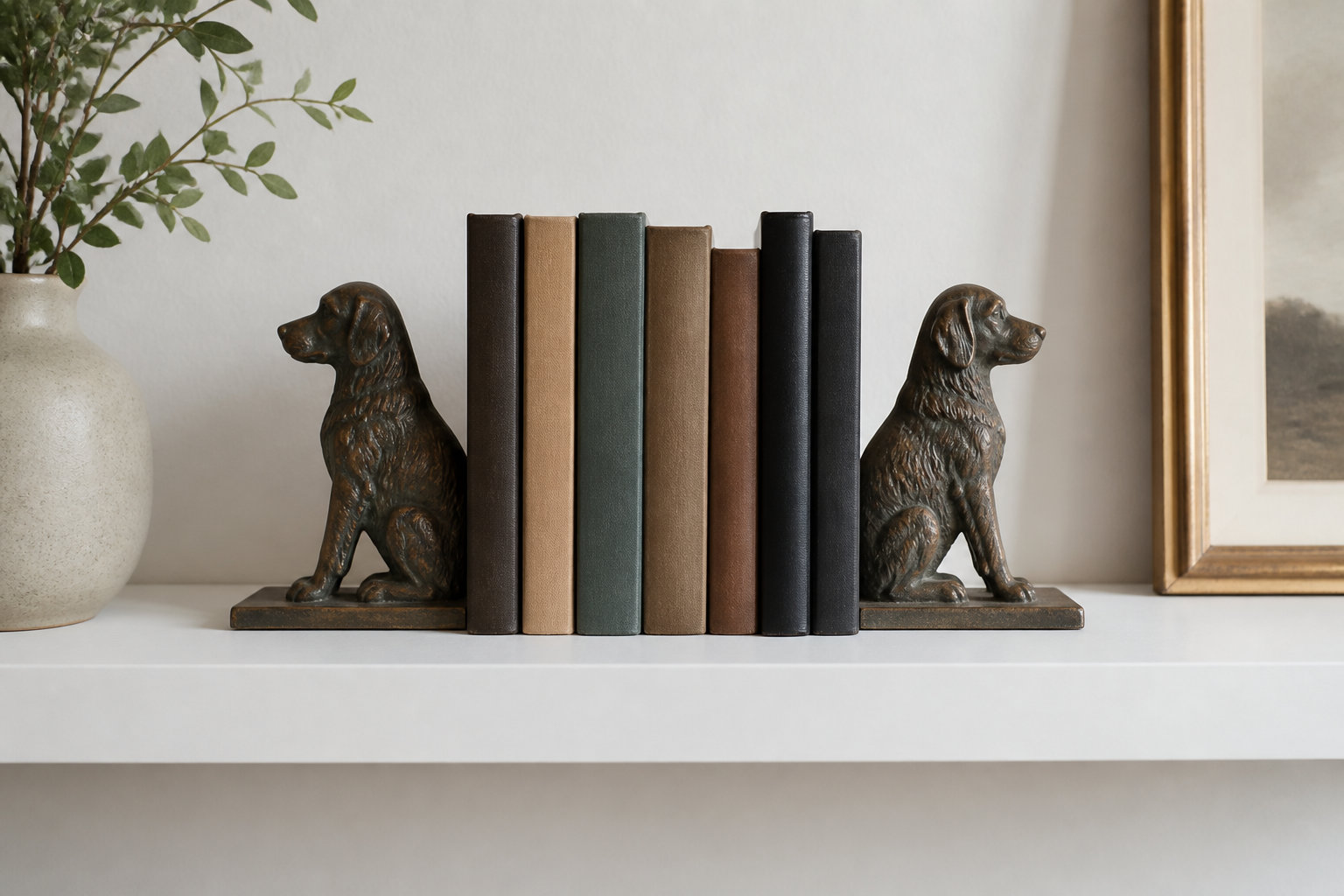
Use your Vintage Bookends Collection as focal points. Let the patina shine against a white wall. This creates a bridge between eras, making a minimalist room feel warmer.
| Era | Primary Material | Ideal Modern Setting | Visual Vibe |
|---|---|---|---|
| Victorian | Cast Iron | Rustic Farmhouse | Ornate & Sturdy |
| Art Deco | Brass | Luxury Minimalist | Geometric & Bold |
| MCM | Teak | Scandinavian | Organic & Warm |
| Industrial | Steel | Loft / Concrete | Raw & Functional |
Creating focal points with asymmetrical pairings
Embrace mismatched vintage pairs. You don't need identical twins to hold your library. Using two different pieces adds character and suggests a collection built over time.
Layer bookends with other artifacts. Place a vintage brass magnifying glass nearby. This tells a cohesive design story, turning a simple shelf into a curated museum display.
Keep the books varied in height. This enhances the lived-in aesthetic. Your library should look like a personal journey, not a sterile furniture showroom.
By identifying authentic foundry marks and mastering era-specific styles like Art Deco or Mid-Century Modern, you transform simple shelves into a curated historical gallery. Secure your Vintage Bookends Collection today to anchor your library with timeless authority and sophisticated charm. Your future home deserves this touch of sculptural history.


